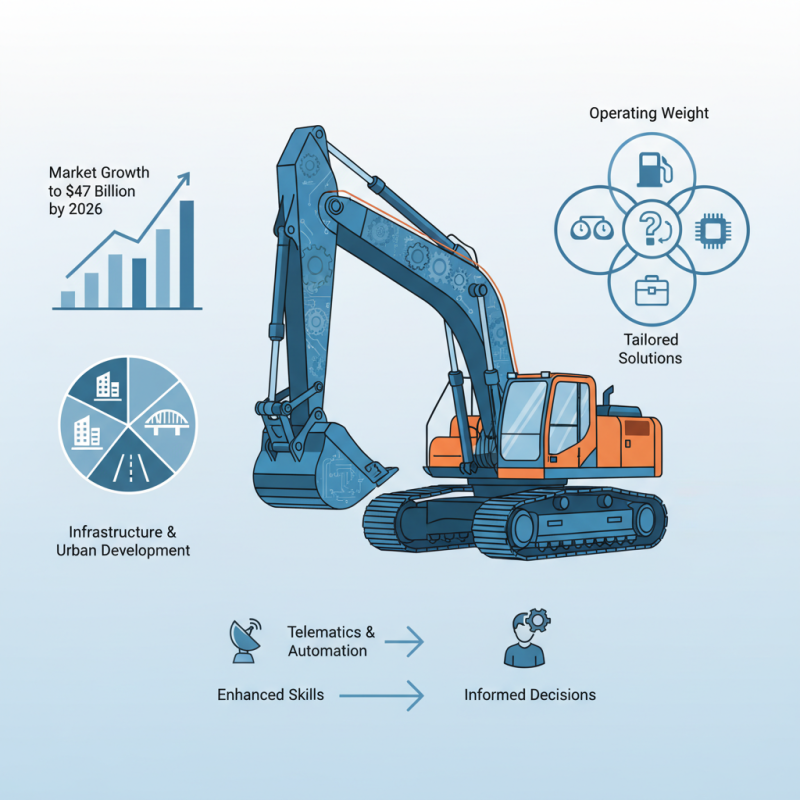
Excavator Equipment plays a vital role in construction and earthmoving industries globally. According to a recent market analysis by IMARC Group, the global excavator market is expected to reach $47 billion by 2026. This projected growth indicates increasing investments in infrastructure and urban development.
The right excavator can significantly enhance project efficiency. However, buyers often face challenges in choosing the most suitable equipment. Factors such as operating weight, fuel efficiency, and technological features must be considered. Each project has unique needs that require tailored solutions in excavator specifications.
As the industry evolves, so does the technology within excavators. Innovations such as telematics and automation are reshaping how operators utilize this essential equipment. Yet, with advancements, the complexity of these machines also increases. Buyers may need to enhance their skills to maximize the benefits of modern excavator equipment. Awareness of these trends is crucial for making informed purchasing decisions.
2026 Global Excavator Market Overview: Trends and Projections
The global excavator market is anticipated to grow significantly by 2026. Demand is driven by construction and mining projects worldwide. Technological advancements in excavator equipment have led to improved efficiency and lower operational costs. Buyers should be aware of these emerging trends when planning future investments.
Tips: Consider your project needs carefully. Understand the terrain and material types before selecting equipment. A well-informed choice can lead to better project outcomes.
Sustainability is another key trend. Companies are increasingly focusing on eco-friendly solutions. Electric and hybrid excavators are gaining popularity. They reduce emissions and comply with stricter regulations. However, the initial investment can be high.
Tips: Budget for long-term savings. Initial costs may be outweighed by lower fuel and maintenance expenses. Always evaluate the total cost of ownership.
As the market evolves, staying updated on innovations is crucial. New software and automation features enhance operator safety and productivity. Buyers must regularly review the available options. Being proactive can help in making the best purchase decisions.
Key Features and Innovations in 2026 Excavator Models
In 2026, excavator models are set to impress with enhanced features. One major innovation is the integration of AI technology. This allows for improved precision in operations. Excavators will be able to analyze worksite conditions in real time. Increased efficiency leads to reduced operational costs, a significant advantage.
Hydraulic systems are also evolving. The push for eco-friendliness drives the development of electric hydraulic systems. These systems use less energy while providing the same power. Operators can expect smoother performance and faster response times. However, these advancements may require new training for workers. Adapting to innovative technology poses challenges for many companies.
Tip: Regular training sessions can help staff adapt more easily to new machinery.
Another key feature is the use of augmented reality (AR) for enhanced visibility. Operators can visualize underground utilities. This minimizes the risk of accidental damage and improves safety protocols. Still, reliance on technology requires vigilance. Mistakes can occur if operators depend solely on AR for guidance.
Tip: Always cross-check AR information with physical assessments.
These innovations in 2026 excavator models represent significant steps forward. However, they also necessitate a reflection on the importance of human skills in construction. Balancing technology and expertise will be crucial.
2026 Top Excavator Equipment Features
This chart illustrates the key features of the top excavator models in 2026, showcasing their engine power, operating weight, maximum digging depth, maximum reach, and hydraulic flow capabilities.
Top Manufacturers of Excavators: Market Share and Industry Leaders
The global excavator market is witnessing significant growth, driven by increased construction and mining activities. According to recent industry reports, the global excavator market was valued at approximately $50 billion in 2022. Projections indicate a compound annual growth rate (CAGR) of around 5.7% from 2023 to 2026. This growth highlights the rising demand for advanced, efficient, and versatile machinery.
Key players in the excavator industry control a substantial portion of the market share. Reports indicate that the top manufacturers account for nearly 60% of total sales globally. Industry leaders focus on innovation, emphasizing fuel efficiency and automation. As sustainability becomes a priority, companies invest in newer technologies to meet emission standards. This shift is not only essential for compliance but also enhances competitive advantage.
Despite the positive outlook, challenges persist. Supply chain disruptions have impacted production timelines. Also, rising material costs may affect pricing strategies. Companies must navigate these issues while meeting market expectations. Continuous improvement in product lines and customer service is crucial. Addressing these factors will position manufacturers for ongoing success.
Comparative Analysis of Excavator Types: Mini, Midi, and Full-Size
Excavators are vital in the construction industry. Understanding the differences among
mini,
midi, and
full-size excavators is crucial for buyers. According to a recent industry report,
mini excavators make up over 30% of the global market. Their compact design allows for operation in tight spaces.
A weight range of 1 to 6 tons makes them ideal for small projects.
Midi excavators, with a weight range of 6 to 10 tons, serve as a bridge between mini and full-size models.
They offer more power without sacrificing versatility. Reports indicate that midi excavators have seen a growth rate of 5% annually.
This trend reveals their increasing popularity among contractors who need flexibility on various job sites.
Full-size excavators are designed for heavy-duty tasks.
Weighing 10 tons or more, they excel in large construction projects. However, their size can limit accessibility in confined areas.
Many operators report challenges maneuvering in urban environments. Selecting the right type of excavator requires considering job site conditions. Each type has distinct advantages and limitations.
Thus, it is essential to evaluate the specific needs of each project before making a purchase.
Factors Influencing Excavator Purchase Decisions Among Global Buyers
When global buyers consider purchasing excavators, several factors come into play. The type of project significantly influences decisions. Different tasks require specific equipment capabilities. Buyers should assess their operational needs carefully. For example, urban construction may demand compact models, whereas mining could need larger excavators.
Tips: Evaluate the terrain and site accessibility. Consider the excavator's turning radius and weight. These details can make a huge difference in efficiency.
Another critical aspect is the total cost of ownership. Buyers often overlook maintenance costs. Regular servicing is essential to keep machines running efficiently. A lower initial price might lead to higher expenses later. Therefore, researching long-term costs is crucial.
Tips: Look for equipment with proven reliability and lower upkeep. User reviews can offer valuable insights into real-world performance.
Lastly, after-sales support is vital. The availability of spare parts and service in your location can influence your choice. A good warranty can provide peace of mind, but it’s important to check the specifics.
Tips: Always inquire about local service centers. The right support can save time and reduce downtime. Buyers should ask questions and ensure they understand the terms of service.
FAQS
: The growth is driven by construction and mining projects worldwide.
Buyers should consider project needs and terrain before selecting equipment. A well-informed choice yields better outcomes.
Companies focus on eco-friendly solutions, including electric and hybrid excavators, to reduce emissions.
Technological advancements lead to improved efficiency and lower operational costs for excavators.
New technologies require operator training to adapt effectively. Regular sessions can ease this transition.
AR improves visibility of underground utilities, minimizing accidental damage and increasing safety.
Operators should cross-check AR information with physical assessments to avoid reliance on technology alone.
Supply chain disruptions and rising material costs can affect production and pricing strategies.
Top manufacturers control nearly 60% of total sales globally in the excavator market.
The market is expected to grow at a compound annual growth rate of around 5.7% until 2026.
Conclusion
The article "2026 Top Excavator Equipment for Global Buyers Guide" provides a comprehensive overview of the global excavator market, highlighting key trends and projections for the coming year. It delves into the significant innovations shaping excavator equipment, focusing on the latest features introduced in 2026 models. A thorough comparative analysis of mini, midi, and full-size excavator types showcases their respective advantages, catering to diverse industry needs.
Furthermore, the guide identifies top manufacturers and their market shares, offering insights into industry leaders. It also examines the factors influencing global buyers' purchasing decisions, ensuring potential buyers are well-informed. Overall, this guide serves as an essential resource for understanding the evolving landscape of excavator equipment and making strategic purchasing decisions.
 Huida
Huida
