
Huida
Choosing the right Hydraulic Grapple can be a daunting task. The market is filled with various options and features. John Smith, a leading expert in hydraulic equipment, once stated, “Selecting the best Hydraulic Grapple hinges on understanding your specific needs.” His insight emphasizes the importance of knowing your requirements.
Different projects demand different functionalities. For instance, landscaping jobs may require a lightweight grapple for easy maneuverability. In contrast, heavy-duty timber operations benefit from robust options that can handle significant weight. Reflecting on your operational environment is crucial. What terrain will you work on? Will the grapple be frequently transported?
Focus on the grapple's compatibility with your machinery. Not all hydraulic systems are alike. An ill-fitting grapple can lead to performance issues and could compromise safety. Researching and consulting experts can provide clarity. It's essential to find a balance between functionality and durability. Each choice has its trade-offs. Consider these aspects carefully before making a decision.
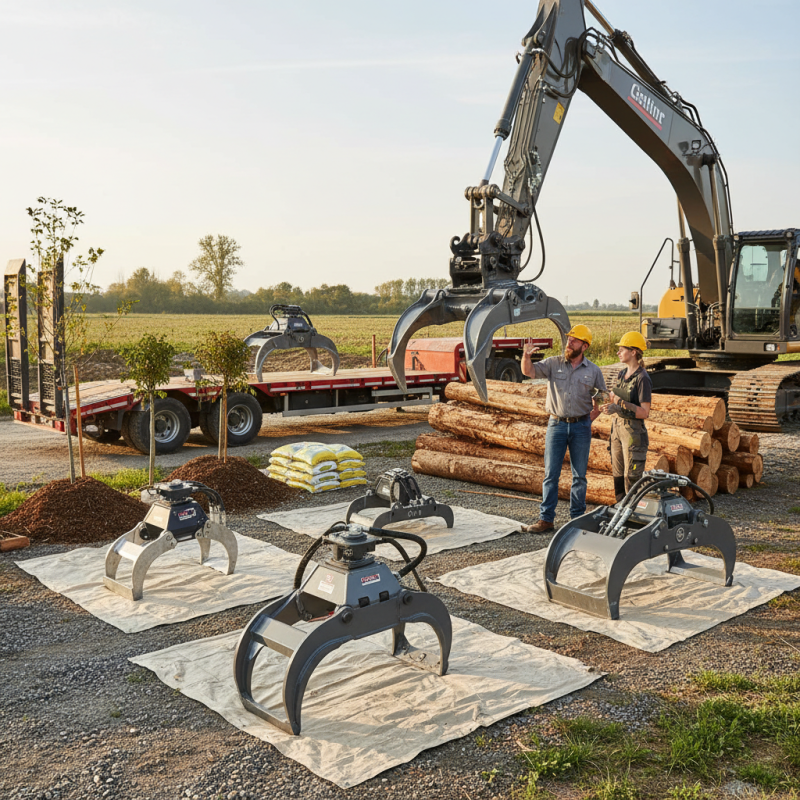
Hydraulic grapples come in various types, each designed for specific applications. Understanding these types can help you choose the right one. For instance, clamshell grapples are excellent for digging and scooping. They excel in handling loose materials like soil or gravel. Conversely, tree grapples are specifically designed for forestry applications. They are built for lifting and transporting logs efficiently.
Another common type is the industrial grapple. This one is versatile, capable of handling both heavy materials and delicate items. Its design balances strength and precision. You might find it useful for scrap yards and construction sites, but it may not be ideal for smaller projects where precision is key.
Choosing the right grapple requires careful consideration. Think about your specific needs. Attachments can be complex, and proper familiarity is essential. Many users overlook weight limits and size compatibility. These factors can affect overall performance, leading to inefficiencies. Thus, assessing your daily tasks and the grapple's capabilities is crucial.
When selecting a hydraulic grapple, understanding key specifications is crucial. Load capacity is one of the most important factors to consider. Many grapples offer a capacity between 1,000 to 5,000 pounds, depending on the application. Heavy-duty models are essential for industrial tasks, while lighter options may suffice for landscaping. Choosing a grapple that accommodates your specific load requirements will ensure efficiency and safety on the job site.
The opening width and jaw design play a critical role in versatility. Grapples with wider jaws allow for handling various materials. A study by the Equipment Engineering Institute indicates that grapples with adjustable jaws improve productivity by up to 30%. Moreover, hydraulic pressure ratings can vary significantly. Some models operate at 2,000 to 3,000 psi, while others can exceed 4,000 psi. Higher pressure allows for faster cycles but may require more maintenance.
Durability is another critical specification. Grapples with reinforced materials last longer in tough environments. However, excessive durability can lead to increased weight, making operation difficult. The choice often balances between strength and ease of use. It's essential to conduct a thorough analysis of your work conditions and frequency of use. This will help in selecting a grapple that meets both performance and operational needs effectively.
When selecting a hydraulic grapple, evaluating load capacity is crucial. The right grapple for your needs depends largely on how much weight it can handle. Consider the materials you'll be lifting. Heavy logs require a grapple designed for increased strength. Check specifications to see the maximum load capacity. This often varies by model and manufacturer.
Understanding the weight of your typical load can prevent overloading. Loading beyond capacity can lead to equipment failure. It can also increase safety risks for operators. For example, a grapple rated for 1,500 pounds may struggle with 1,700 pounds. Think about the type of operations you perform. Are you lifting rocks, timber, or debris? Each has different weight considerations.
Experience plays a key role here. Operators may intuitively know when they are pushing limits. However, accurate load assessments are essential. Reliable equipment manuals will guide this process. If uncertain, consulting a hydraulic specialist can enhance decision-making. Ensure that the grapple suits both your needs and the machinery it attaches to. Compatibility matters just as much as load capacity.
When selecting a hydraulic grapple, size and jaw configuration play crucial roles in efficiency. The size of the grapple must match the scale of your operations. A grapple that is too large may be cumbersome, while one that is too small can limit maneuverability. Proper sizing ensures the grapple complements your existing equipment, allowing smoother workflows and more effective handling of materials.
Jaw configuration also affects performance. Different shapes cater to specific tasks. For example, wider jaws are excellent for grasping bulky materials, while narrower jaws provide precision for smaller objects. It’s essential to consider the types of materials you will handle. A mismatch can lead to wasted time and increased frustration. Testing different configurations could yield insights into what works best for your needs.
Relying solely on standard options may not yield the best outcomes. You might realize that the most popular choices aren't suited to your unique situations. Adjusting your expectations and being open to trial and error can lead to better, more tailored results. By analyzing your specific requirements, you can find the right balance of size and configuration, maximizing your grapple’s potential.
| Grapple Type | Jaw Configuration | Size (inches) | Weight (lbs) | Max Load Capacity (lbs) |
|---|---|---|---|---|
| Standard Grapple | Two-finger | 30 | 250 | 2000 |
| Heavy Duty Grapple | Four-finger | 48 | 600 | 3500 |
| Log Grapple | Two-finger | 36 | 300 | 2500 |
| Brush Grapple | Clamshell | 42 | 400 | 3000 |
Maintaining a hydraulic grapple is essential for maximizing its lifespan and performance. Regular maintenance prevents issues that can lead to costly repairs. Start with a routine inspection. Look for signs of wear and tear, especially around the hydraulic hoses and joints. Small leaks can escalate into major problems if not addressed promptly.
One crucial tip is to keep the grapple clean. Dirt and debris can interfere with the grapple's operation. Use a pressure washer or a simple hose to remove build-up, particularly in moving parts. Pay attention to any rust or corrosion. This can weaken the structure over time.
Lubrication is another key maintenance point. Use the appropriate grease for the joints and pivot points. Proper lubrication reduces friction and ensures smooth operation. Failing to lubricate regularly might result in increased wear, leading to premature failure. Reassess your maintenance schedule every few months. Adjust it based on your usage. Make a checklist to ensure you do not miss vital steps. Keeping a log of maintenance can also help track issues over time.
: Most grapples have capacities between 1,000 and 5,000 pounds. Choose based on your specific needs.
Wider jaws increase versatility. Adjustable jaws can boost productivity significantly, according to studies.
Look for wear around hydraulic hoses and joints. Small leaks can quickly turn into major problems.
Dirt can interfere with operation. Clean moving parts regularly to prevent performance issues.
Use the right grease for joints and pivot points. Proper lubrication reduces friction and wear.
Reassess it based on your grapple usage. Adjust as necessary if you notice increased wear or issues.
Skipping inspections or neglecting lubrication can lead to premature failure. Tracking maintenance can help avoid this.
Higher pressure often leads to faster cycles. However, it may require more maintenance to keep it running smoothly.
Choosing the best hydraulic grapple for your needs involves several key considerations. First, it's essential to understand the different types of hydraulic grapples available and their specific applications, as this will help you determine which is best suited for your tasks. Key specifications, including load capacity, size, and jaw configuration, play a crucial role in ensuring that the grapple can efficiently handle the desired weight and deliver optimal performance.
Additionally, maintaining your hydraulic grapple is vital for longevity and consistent performance. Regular maintenance not only ensures that the grapple remains in good working order but also enhances its efficiency over time. By considering all these factors, you can select a hydraulic grapple that meets your operational requirements effectively.
