 Huida
Huida
Huida
Huida
Explore our foundational range of heavy-duty hydraulic tools and excavator attachments built to match the high standards of global recycling, construction, and metal processing sectors.
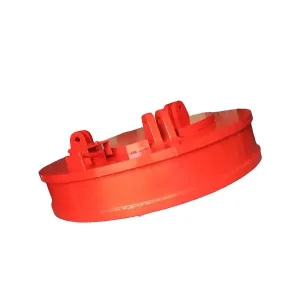
Understanding the physics, kinematics, and structural dynamic parameters that define modern industrial shearing equipment.
In high-capacity heavy fabrication, the Hydraulic Guillotine Shearing Machine stands as a primary structural process for cold-cutting flat sheet metals and plate materials. Unlike swing beam shear designs which utilize a rotational axis for the upper blade assembly, a guillotine shear utilizes a vertical, linear slide-guided stroke mechanism. This ensures that the upper blade travels along a strictly perpendicular path relative to the material bed. This structural setup significantly reduces the impact of twist, bow, and camber deformation on the sheared edges—particularly when dealing with thick plate sections, high-tensile steels, or alloyed materials.
At the center of high-performance guillotine systems is the precise control of the rake angle and the blade clearance (blade gap). The rake angle refers to the slope of the upper blade relative to the horizontal plane. A larger rake angle decreases the shearing force required to sever a given material thickness, allowing compact hydraulic cylinders to process heavy plates. However, this angle also increases the potential for structural twists in narrow offcuts. Leading OEM manufacturers address this by integrating smart, electro-hydraulic systems that adjust the rake angle dynamically based on input material criteria, ensuring high precision while protecting internal hydraulic systems from excessive pressure spikes.
Proper clearance prevents micro-fracturing along the cut path. Programmed electro-hydraulic servo motors adjust the gap according to material mechanical properties, guaranteeing burr-free cuts.
Frames engineered using finite element analysis (FEA) show minimal deflection during structural peaks. Heavy-duty stress-relieved steel guarantees consistency under multi-shift setups.
High-speed oil decompression systems limit shockwave distribution across hydraulic lines, protecting solenoid valves, seals, and cylinders from early fatigue.
The table below provides comparative engineering parameters across standardized hydraulic guillotine shear setups commonly integrated into major modern manufacturing plants.
| Machine Model Spec | Shearing Thickness (Mild Steel) | Shearing Length Range | Rake Angle Range | Backgauge Stroke Velocity | Main Hydraulic Motor Power |
|---|---|---|---|---|---|
| HGS-0630 Heavy Duty | 6 mm | 3200 mm | 0.5° - 1.5° | 120 mm/s | 7.5 kW Premium Core |
| HGS-1240 Industrial Pro | 12 mm | 4000 mm | 0.5° - 2.5° | 150 mm/s | 15.0 kW Dual Pump |
| HGS-1660 Custom Line | 16 mm | 6000 mm | 1.0° - 3.0° | 180 mm/s | 22.0 kW High-Flow |
| HGS-2580 Extreme Series | 25 mm | 8000 mm | 1.5° - 4.0° | 200 mm/s | 37.0 kW Multi-Station |
Initially established in December 2016 and renamed on March 25, 2019, with a registered capital of 20 million yuan.
Huida is dedicated to the research, development, production, and sale of scrap steel processing, automobile recycling, renewable resource utilization, and heavy environmental protection and energy-saving equipment. In addition, our manufacturing lines produce high-strength excavator accessories that operate in demanding environments globally.
"Putting customers at the center and providing attentive service is our core operating principle. We strive for excellence, and service first is our standard for work."
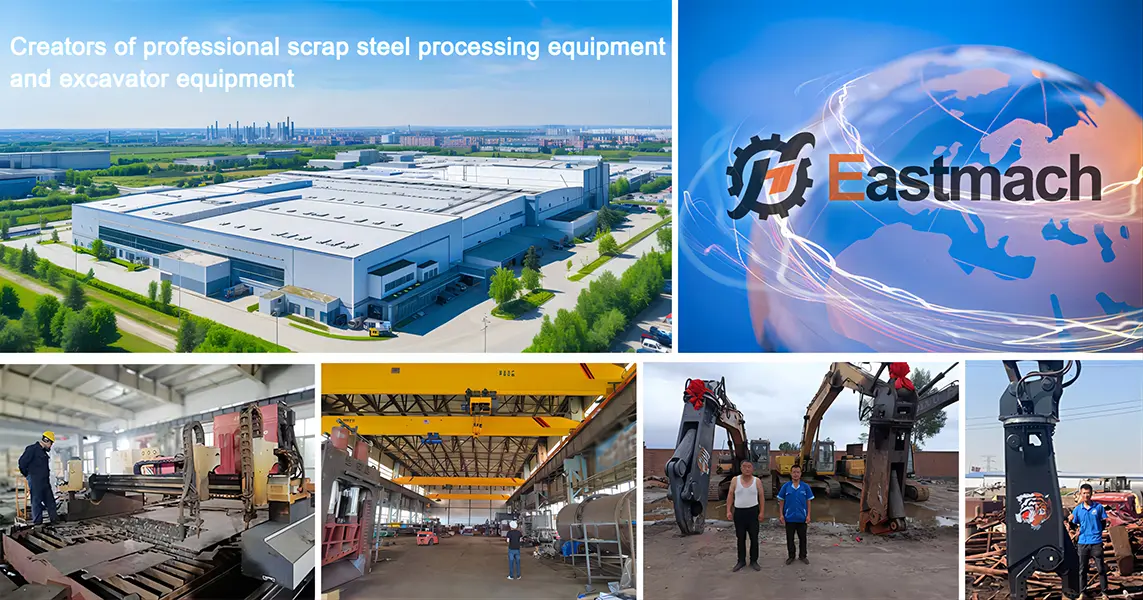
All products have undergone the entire process of quality control from accessory procurement to final product delivery, ensuring that each piece of machinery conforms to local industrial codes. By establishing stable supply chains with raw material partners, we maintain accurate control over structural components like main frames, pistons, gears, and hydraulic pumps.
We test all incoming steel plates for tensile strength, elongation, and carbon equivalent values to ensure they meet specifications.
All guide blocks, blade seats, and critical cylinder housings are machined using modern high-accuracy CNC centers.
Frames undergo thermal stress relief or vibratory processes to prevent operational frame warping over long service lifetimes.
Before dispatch, all machines complete testing under maximum workload ratings for 48 hours continuous running.
Why sourcing OEM Hydraulic Guillotine Shears from China's premier industrial clusters offers structural, cost-effective advantages for international buyers.
Proximity to major high-grade steel producers ensures constant access to certified wear-resistant materials like Hardox and premium manganese alloys. This proximity significantly dampens the effect of localized price fluctuations.
Operating in Yantai positions us within a concentration of heavy machinery suppliers. Component supply networks for hydraulic seals, valves, and precision control systems lower total manufacturing times and costs.
Proximity to major ports like Qingdao provides streamlined global shipping logistics. Dedicated heavy-haul routing, export customs clearance, and container shipping minimize shipping overheads and overall timelines.
Our production framework balances customized low-volume requirements with mass-production efficiency. Whether you need a highly specific rake angle range, custom paint configurations, automated feeding lines, or precise physical dimension adaptations, our production floors are structured to deliver customized OEM batches without causing extended lead times.
Sourcing metalworking machinery requires adhering to regional regulatory frameworks and safety rules. Standard operations require compliance with directives to ensure safe operation, liability coverage, and insurance compliance.
Our heavy-duty hydraulic shears are utilized across diverse and challenging environments worldwide, showing high structural reliability:
We work with international distributors to integrate preferred control hardware, localized human-machine interfaces (HMI), metric or imperial measuring systems, and customized electrical component configurations based on national grid standards (e.g., 220V/380V/440V at 50/60Hz).
A transparent look at our formal quality systems, certified manufacturing procedures, and production patents.
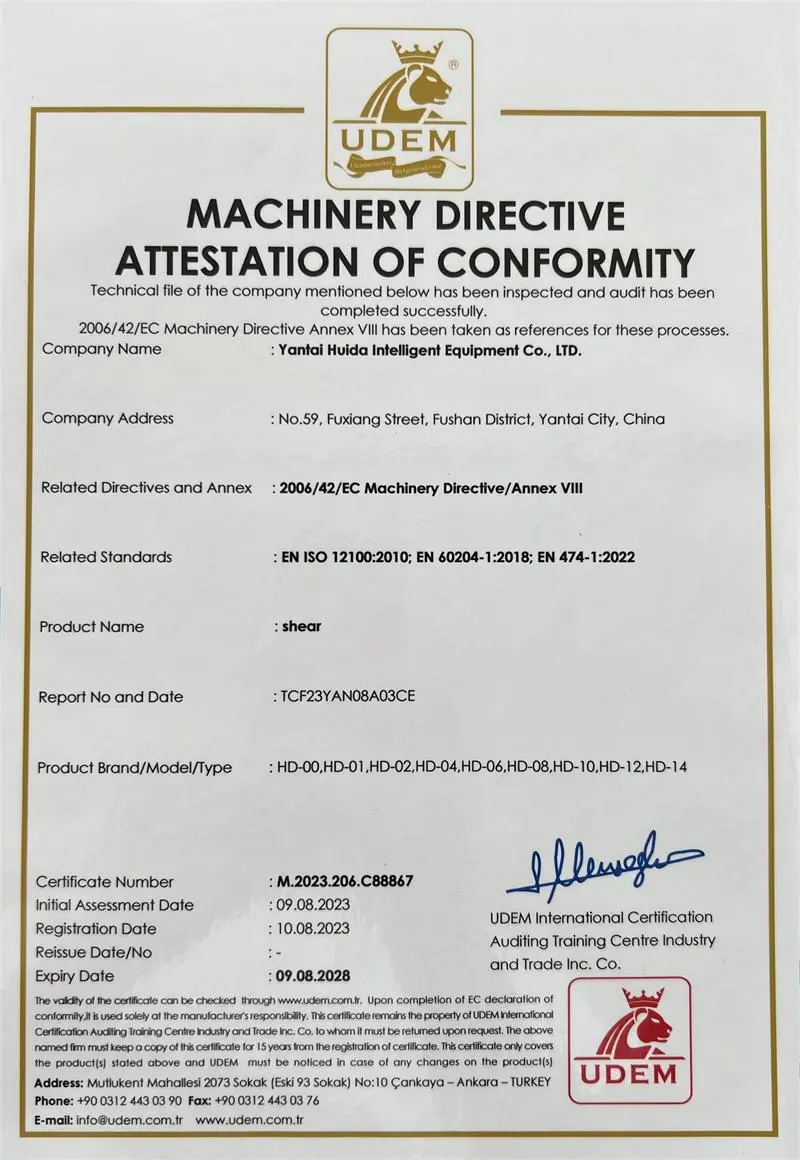
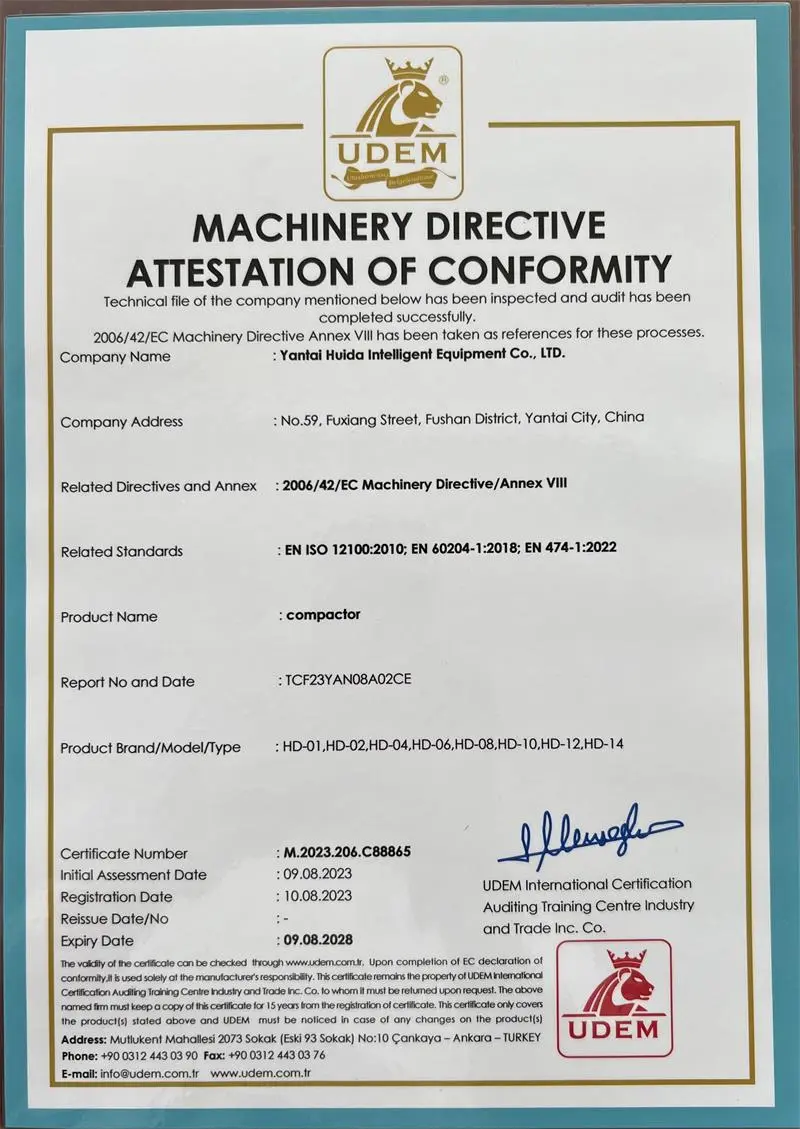
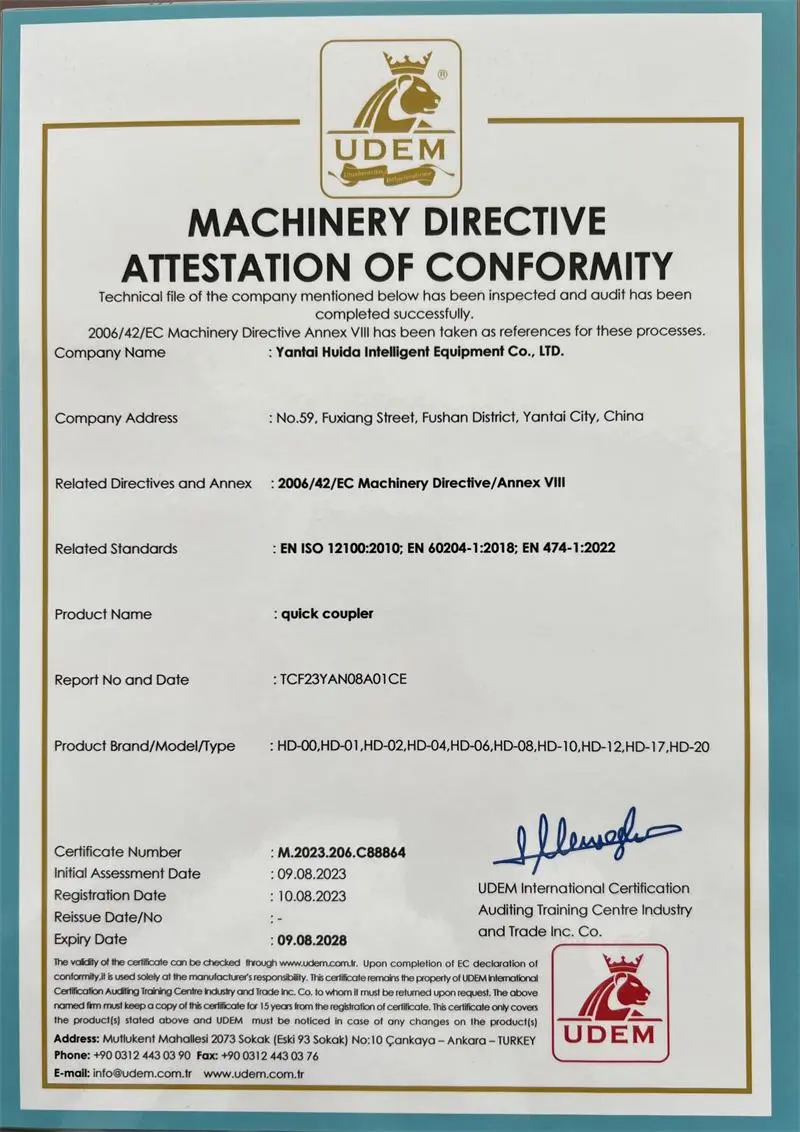
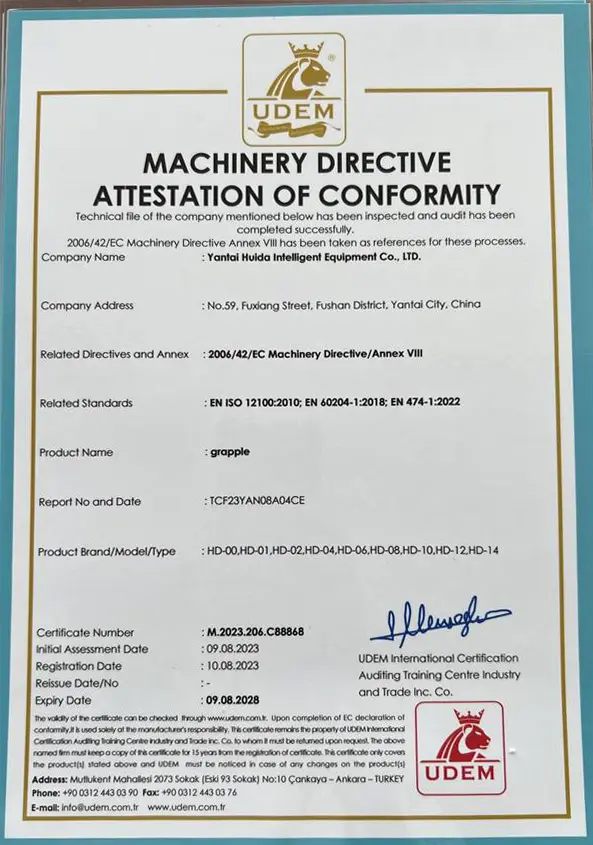
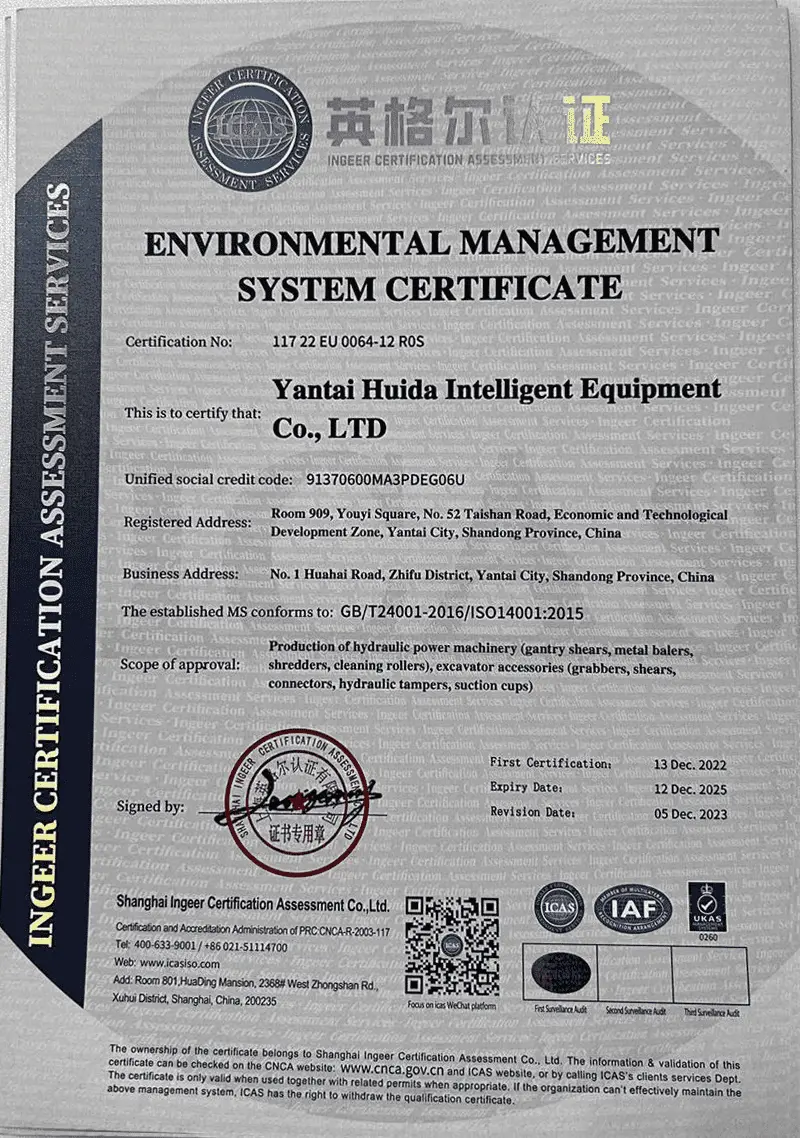
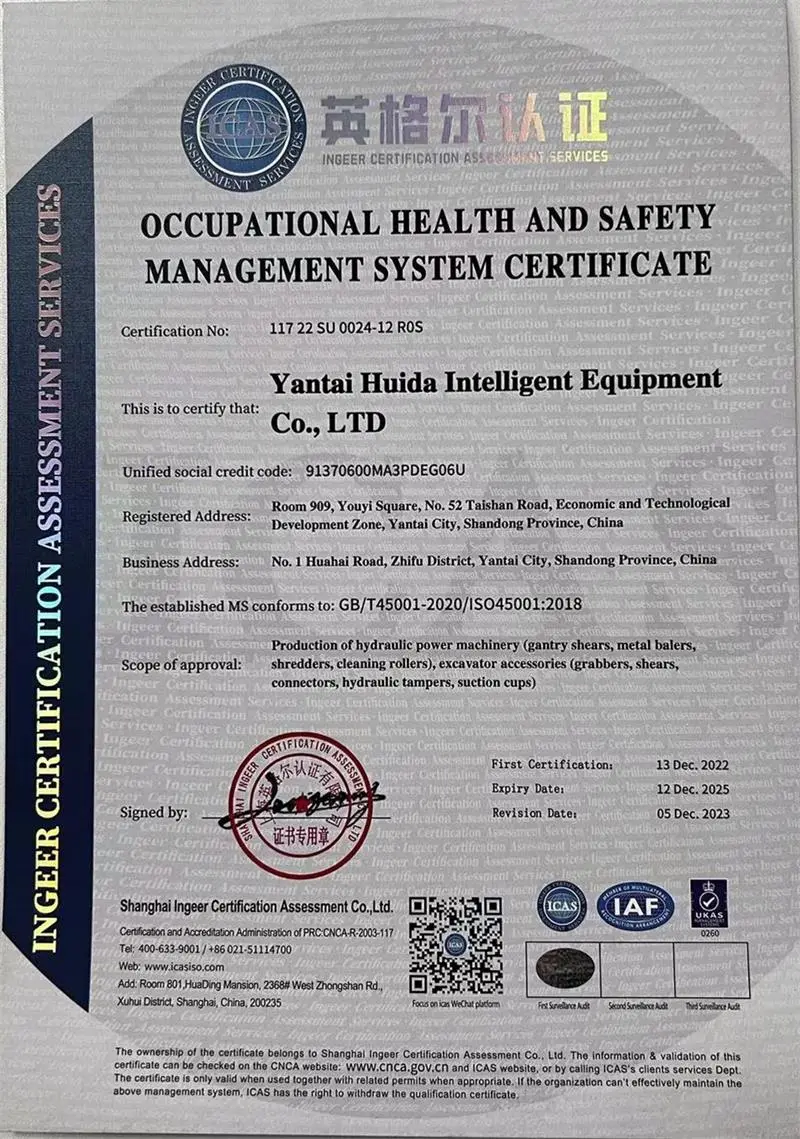
Our production environments undergo standard third-party audits. Customers are welcome to request full physical copies of our ISO registrations, test records, and design certificates through our technical support desk.
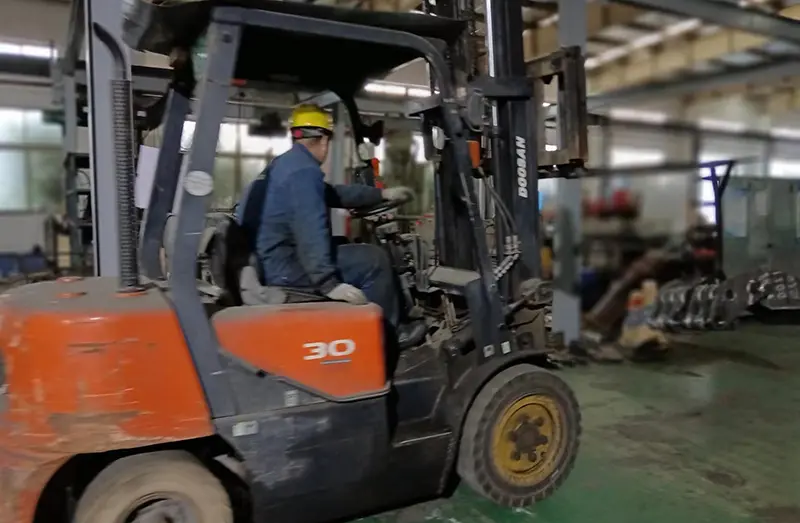
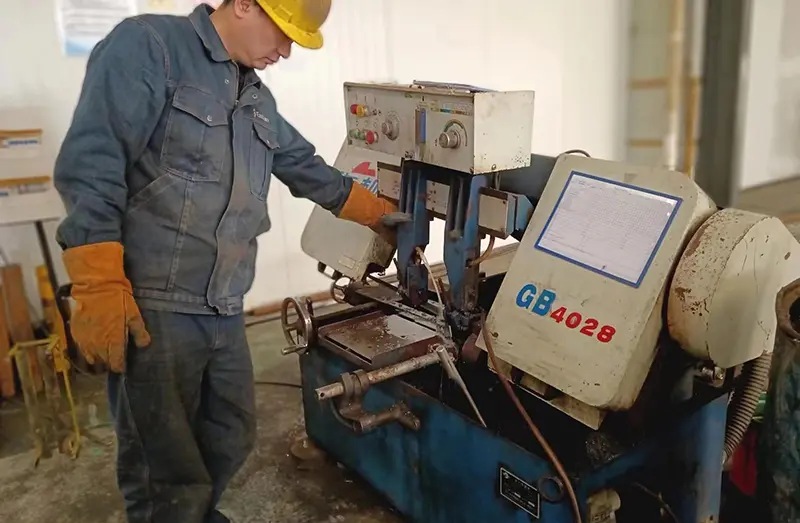
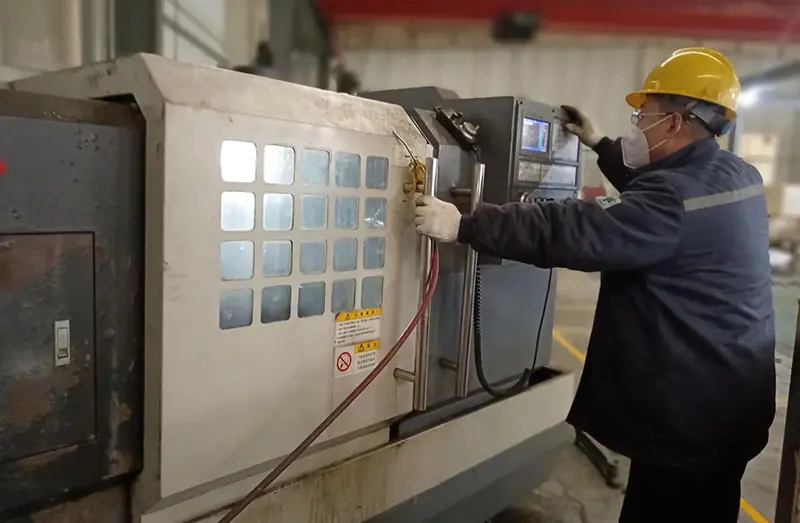
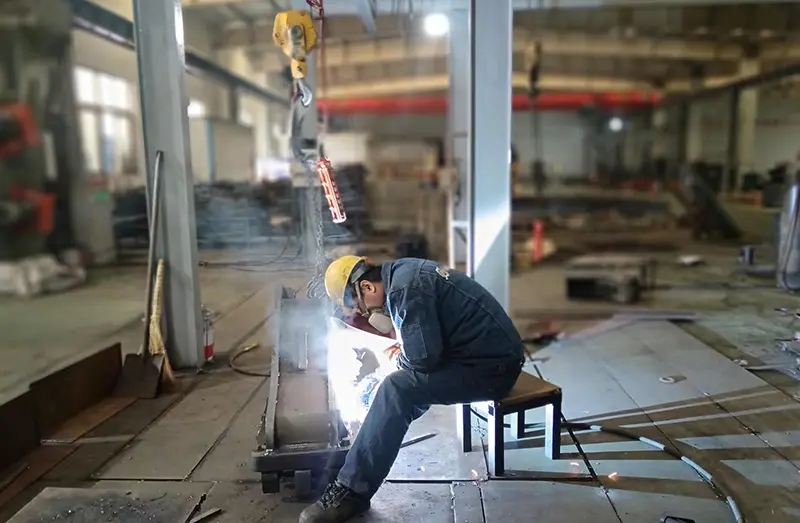
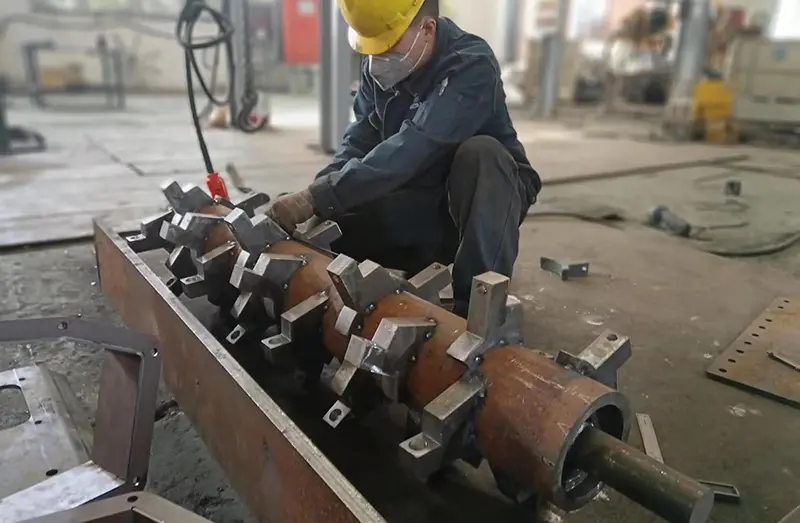
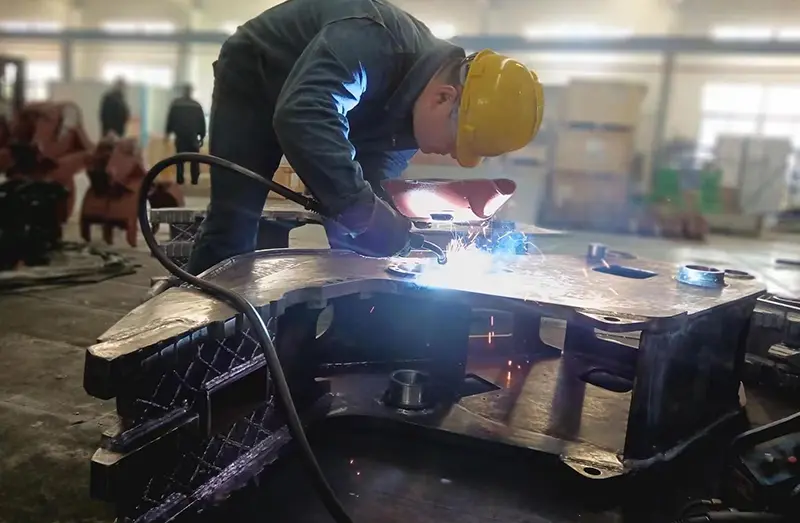
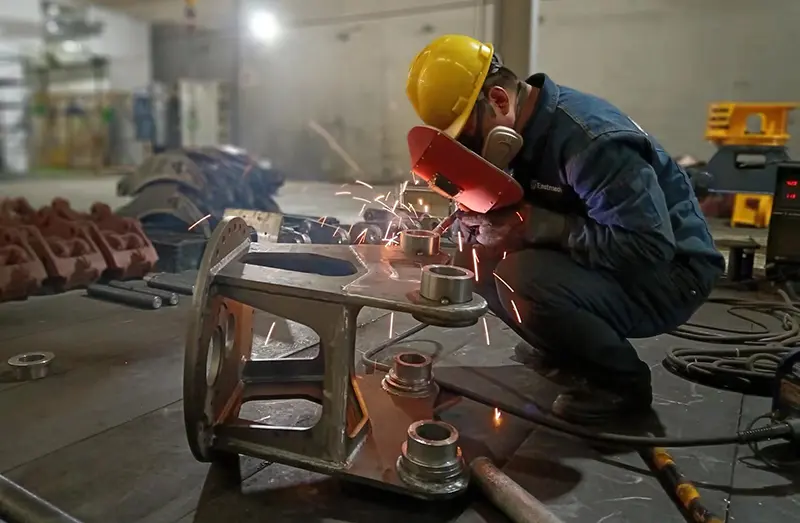
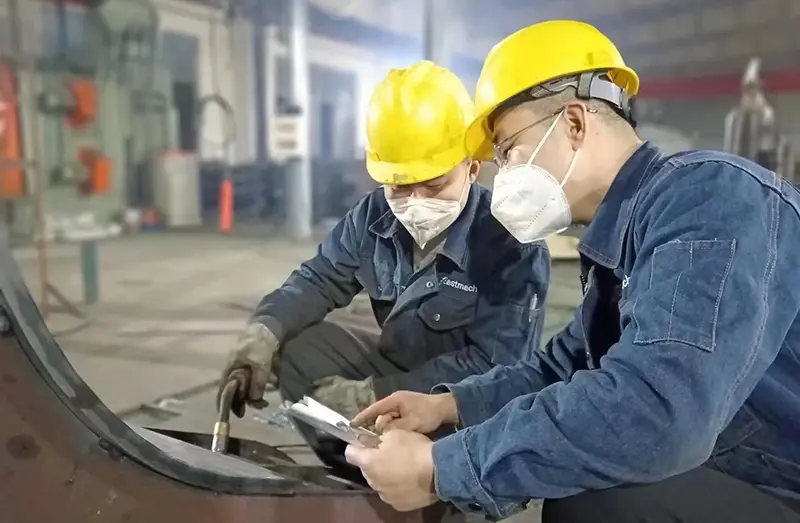
A look inside our machining halls, structural welding positions, and testing facilities in Yantai.
Providing clear and structured technical support throughout our partnership.
Our service structure covers the full life cycle of heavy processing equipment, from initial specification consultations to on-site implementation and preventative maintenance.
Our engineering team includes high-end skill sets across mechanical design, hydraulic logic programming, and structural analysis, supported by specialized processing technicians.
OEM Partners, Specialized Agents, Equipment Dealers, Machine Rental Companies, and Enterprise Recycling Facilities globally.
Providing product introductions, OEM custom design blueprints, and comprehensive support services. We assist with mechanical setups, hydraulic calibration, operator safety programs, and PLC control system updates.
Our specialized engineering team and design staff manage custom product drawings. Continuous structural refinement maintains operational reliability and helps match specific regional mechanical guidelines.
We commit to providing technical feedback for operational requests within 24 hours. We strictly maintain commercial confidentiality for proprietary designs and back our systems with standardized manufacturing warranties.
Detailed technical explanations covering operating mechanics, hydraulic setups, and routine maintenance practices.
Guillotine shears utilize a linear vertical slide path rather than a rotational swing beam. This structural path reduces blade deflection under load, allowing for adjustable rake angles and higher cutting accuracy. The vertical descent minimizes the twisting and distortion of narrow sheared strips, extending blade edge life when processing hard alloy steel plates.
Proper blade clearance is key to clean material separation without secondary burrs. Setting the gap too wide results in plastic deformation and rounded, burred edges. Setting it too narrow leads to high shear forces and accelerated blade wear. Automated gap control systems adjust clearance based on plate thickness and material yield strength, maximizing cut quality and extending edge life.
Our heavy shearing systems integrate subplate-mounted electro-hydraulic valves and accumulator loops to mitigate sudden pressure drops at the end of the cutting stroke. This configuration dampens physical shocks, protecting high-pressure piping, flange joints, cylinder seals, and overall frame stability.
We customize internal controls to align with regional voltage requirements (e.g., 220V/380V/440V/480V at 50Hz/60Hz). Safety systems are tailored to meet regional regulations, featuring emergency-stop networks, optical safety curtains, and fully enclosed rear protective shielding.
Standard maintenance practices require checking hydraulic oil filtration weekly, measuring blade clearances daily under heavy workloads, and lubricating linear slide tracks every shift. We recommend oil analysis and complete seal inspection every 2,000 operational hours to prevent unscheduled down-time.
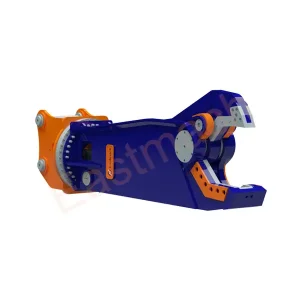
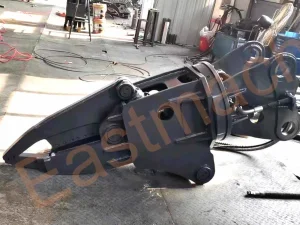
Explore our advanced range of specialized hydraulic shearing machinery, demolition shears, and versatile material processing attachments.